
Justice Turning Into Revenge
The RoomThis flow traces how a demand for accountability gradually merges with the prisoner’s desire to dominate and punish his imagined enemies.
increasing Bearing strength in each event
 decreasing
Bearing strength in each eventdecreasingThe Letter’s Public Cause

The Letter’s Public Cause
A Political Argument
The Unnamed protagonist drafts a letter claiming that petty laws and police discretion allow officials to harass ordinary citizens. He presents his own detention as evidence of a broader danger, arguing that unchecked authority could threaten the public at large.
The Private Hope Beneath It
As he revises the letter, he imagines its publication bringing influence and protection. He expects the press to intervene, officials to face scrutiny, and his own position to change. His language of civic duty therefore carries a personal promise: a way to turn helplessness into leverage.
The letter introduces the moral ambiguity at the heart of his imagined campaign. Its concerns about abuse of power are expressed as public principle, but the imagined rewards already include recognition, rescue, and a reversal of who holds power.
Allies in the Rescue Fantasy
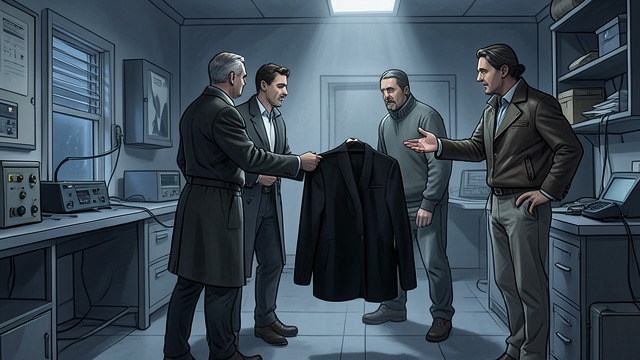
Allies in the Rescue Fantasy
Institutional Support Imagined
The Unnamed protagonist imagines Donald Preston and Stacey Lowry arriving in response to his letter. They treat him as credible and articulate, offer immediate legal help, and discuss a coordinated campaign against abusive authority.
Cause and Personal Vindication
Their imagined alliance confirms his account and restores his standing. He believes their influence can secure his release and bring the police and legal system under public examination. In return, he imagines himself as the uniquely capable witness around whom their work can be organized.
The scene turns justice into a partnership that guarantees both social impact and personal importance. Its public purpose appears sincere within the fantasy, but it is inseparable from the protagonist’s expectation that the campaign will defeat those who have humiliated him.
The Trial as a Weapon
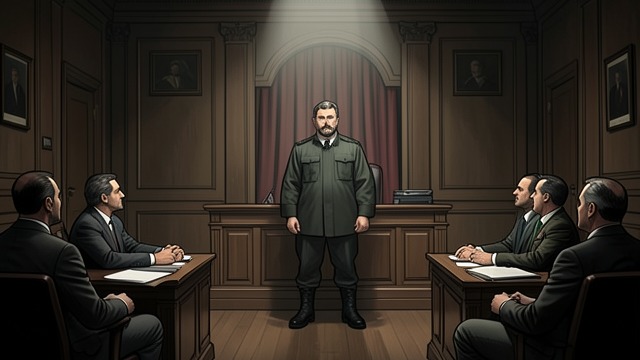
The Trial as a Weapon
A Revised Legal Contest
The Unnamed protagonist imagines taking control of his defense and exposing the officers’ contradictions before a watching courtroom. In this version, his observations are exact, the lawyer cannot silence him, and the jury recognizes the truth of his case.
Victory Beyond Acquittal
He imagines the officers being found guilty and disgraced, with the public following every humiliation. The imagined result is more than an answer to an accusation: it gives him a chance to make his opponents experience the exposure and helplessness he associates with his own arrest.
The trial fantasy therefore transforms legal scrutiny into an instrument of personal retaliation. His criticism of a system that denies him control coexists with a wish to control the fate and public image of its individual agents.
The Statewide Crusade

The Statewide Crusade
From Complaint to Mission
The imagined campaign expands from one arrest to state hearings, press coverage, and legislative action. The Unnamed protagonist sees himself as the living evidence that gives documents and statistics emotional force, while the public and lawmakers supposedly rally behind the cause.
The Mission’s Punitive Edge
Even as he describes reform, his private thoughts return to making officers suffer for every moment he has spent confined. He imagines long-term surveillance, public disgrace, and punishment extending to families. Reform and vengeance no longer occupy separate compartments in his thinking.
This progression clarifies the danger in his self-appointed role. A campaign framed as justice becomes a channel for the fantasy of unlimited personal retribution, with political influence imagined as the means by which enemies can be made to pay.
A Verdict Without Release

A Verdict Without Release
Punishment in Place of Resolution
The Unnamed protagonist imagines the officers being declared emotionally unfit and committed to a mental institution. He presents their removal from the force as a measured public response, but privately plans to ensure they remain confined and socially ruined.
The Campaign Has No End
His imagined plans reach beyond the case to the officers’ spouses, children, and future lives. Even after the supposed legal outcome, he pictures continuing surveillance and exposure. Justice offers no point at which the grievance can be relinquished; it becomes a lifelong mandate to prolong suffering.
The story’s imagined verdict thus resolves nothing in the protagonist’s emotional life. As the actual cell remains unchanged, the promised triumph is replaced by a continuing demand for revenge, and the approaching court summons finds him unwilling to move.
Early in the imprisonment, as he drafts the letter to the newspaper
Immediately after the imagined newspaper response
After his recollection of the failed preliminary hearing
Near the later part of the imprisonment, during the imagined state investigation
In the final imagined proceedings, before the last court summons
